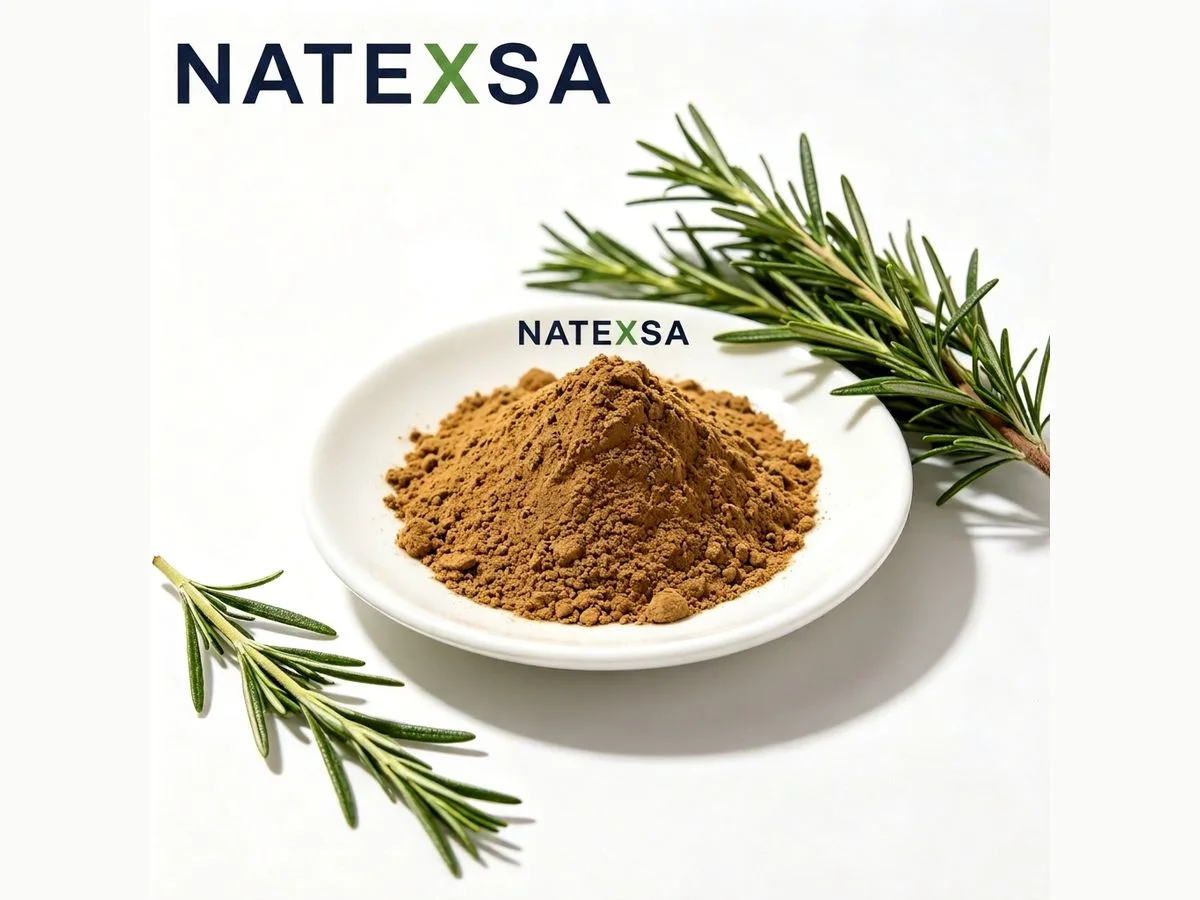
Rosemary Extract is the most versatile antioxidant in the botanical portfolio because it is really three ingredients in one plant. Rosmarinic acid is water-soluble and works in aqueous systems; carnosic acid is oil-soluble and is the reference for protecting fats and oils; ursolic acid is a triterpene used in cosmetics and nutrition. NATEXSA supplies decolourised and deodorised grades, which is what makes it usable in food without altering colour or flavour.
Metabolites
Rosmarinus officinalis L.
Part usedLeaf
Phenolic diterpenes and plant acids: carnosic, rosmarinic and ursolic.
Metabolites we quantify
- Rosmarinic acid5 %–30 %HPLC
- Carnosic acid10 %–95 %HPLC
- Ursolic acid25 %–98 %HPLC
Reference doses
Figures published by reference bodies for the preparation named in each row.
| Marker or preparation | Daily dose | Source |
|---|---|---|
| Carnosic acid + carnosol | Temporary ADI of 0–0.3 mg per kg body weight per day, as additive E 392 | JECFA, 2016 · carried over by EFSA in the 2018 exposure assessment |
These are not a NATEXSA dosage recommendation nor a therapeutic indication: they are cited literature, and the preparation the source refers to does not always match the grade we supply. The regulation of the market where you register the product governs.
Applications
Food & Beverage
Natural preservation of oils and fats, meat and fish products, sauces, bakery and confectionery: it extends shelf life and stabilises colour and flavour.
Nutrition & Health
Antioxidant supplements in capsules, tablets and powders.
Personal Care
Cosmetic preservation, anti-ageing formulations and scalp care.
Formulation guidance
If the matrix is aqueous — beverages, gels, water-based cosmetics — the answer is rosmarinic acid. If what you are protecting is fat — frying oil, meat products, oily sauces, softgels — it is carnosic acid, which sits in the phase where oxidation actually occurs.
Ursolic acid is not a preservative: it is a triterpene used for its own functional value in cosmetics and sports nutrition. Do not substitute one for another; they solve different problems.
Sensory characteristics
Non-decolourised rosemary extract carries colour and a distinct herbal aroma that is noticeable in delicate products. The decolourised and deodorised grades exist precisely for that: to protect without being tasted.
The effective dose in fatty matrices is typically in the 200–1000 ppm range depending on the substrate and target shelf life. We recommend an accelerated oxidation test on your specific matrix before setting the level.
Packaging
Aluminium bag
1 – 5 kg
Fibre drum with double inner liner
25 kg
- Shelf life
- Shelf life of 24 months sealed, away from light and heat.
Specification updated: